Compost

What is composting?
Composting is the slow, natural decomposition of organics. Composting at home is the controlled faster decomposition of materials such as yard waste, plant clippings, and food waste. Microorganisms, soil fauna, enzymes, and fungi work together to break material down into a nutrient-rich dirt-like material.Why Compost?
Every year about 30% of the waste South Carolinians send to landfills is considered organic waste. Organic materials do not decompose regularly in landfills and contribute to emitting landfill gasses. Composting can reduce materials sent to landfills, can save taxpayer dollars, and is a great material for your garden.Beaufort County Composting Pilot Program
The pilot program is a new initiative to help residents reduce food waste by offering convenient access to compost drop-off sites. This project is supported in part by a USDA grant that funds program development, community outreach, and educational materials to help residents learn how to compost correctly and confidently. The grant also covers the creation of tools—such as our compost mascot and digital graphics—that make the program more accessible and engaging.
In addition, the program benefits from a South Carolina Department of Environmental Services (DES) grant, which provides resources for collection infrastructure, safety equipment, and public education related to food waste diversion. These combined grant investments ensure the county can launch the pilot responsibly, track its impact, and prepare for long-term expansion if successful.
Food Waste Drop-Off
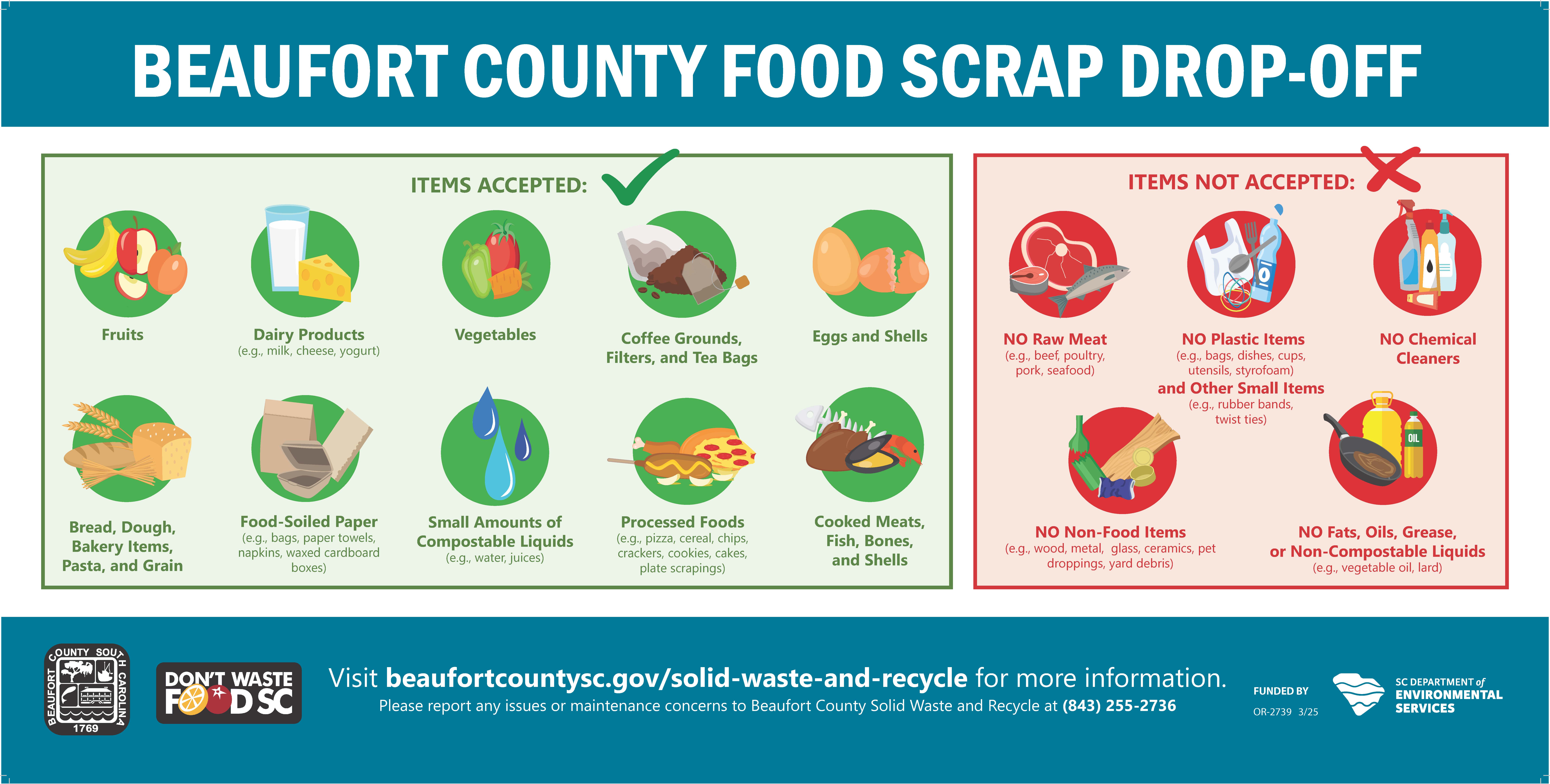
Through the compost pilot, residents can bring accepted food waste to designated drop-off sites located at select County facilities. Each site includes clearly labeled collection bins, signage, and instructions to help residents participate correctly.
The collected food scraps are transported to a composting facility, where they are turned into a valuable soil amendment instead of creating methane in the landfill. This program helps reduce disposal costs, supports local sustainability goals, and gives residents a simple way to make a positive impact every day.
Residents can sign up to participate by taking a short quiz that helps them learn what materials are accepted for composting. Once completed, participants will receive an access code to use any of the county’s designated food scrap drop-off sites.
Drop-off Site Locations:
-
Bluffton: 104 Simmonsville Rd., Bluffton
-
Shanklin: 80 Shanklin Rd., Beaufort
-
Hilton Head: 26 Summit Dr., Hilton Head
-
St. Helena: 639 Sea Island Parkway, St. Helena
Don't Waste It, Compost IT!
Get Started with Step 1: LEARN!
Watch this quick training video and then take the quiz to unlock your code to access the drop-off bins.
For additional information check out this Compost Flyer! Please share with neighbors and friends!
Take the compost quiz to get the code to unlock the bins here: COMPOST QUIZ
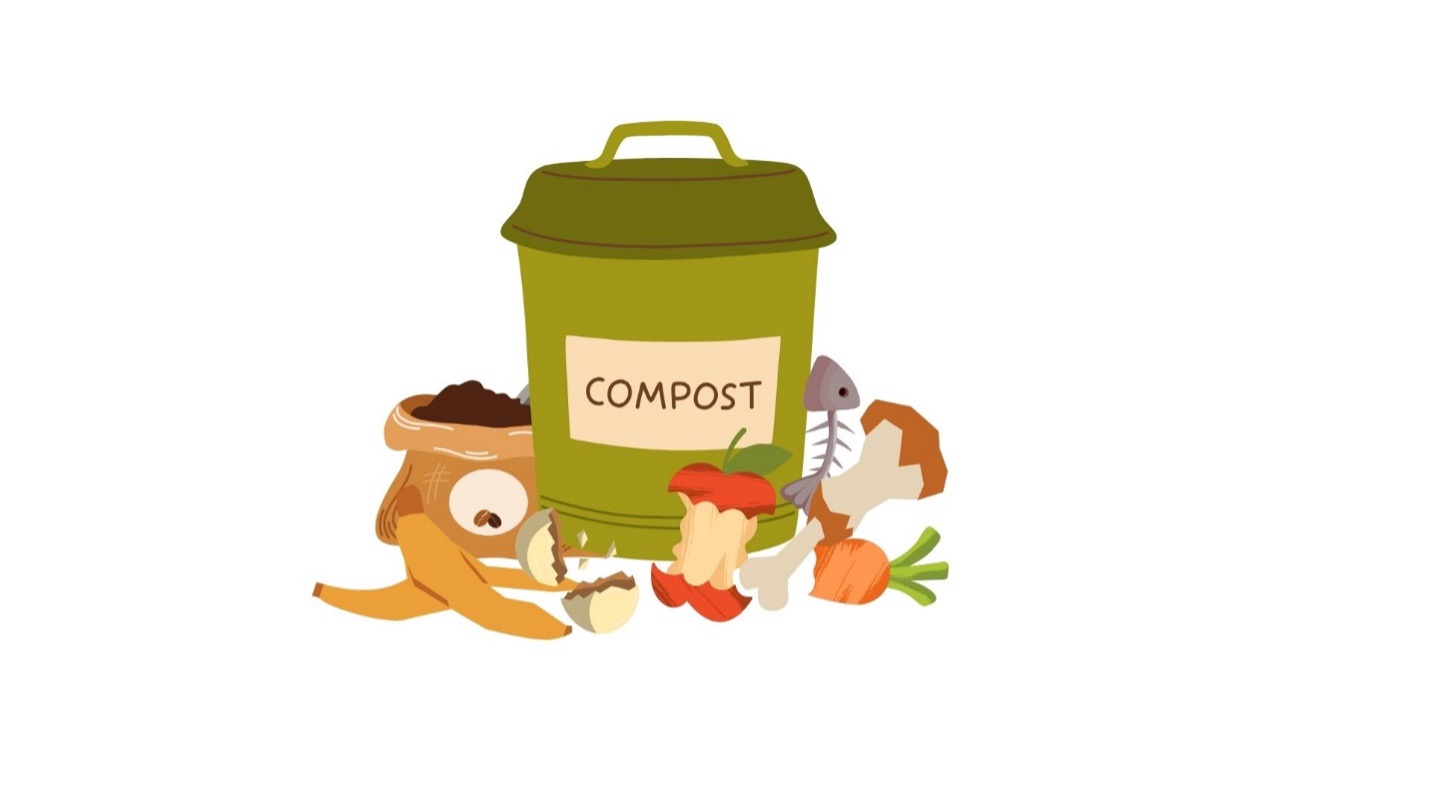
Step 2: COLLECT FOOD SCRAPS FROM HOME
Use a small bin with a lid to collect food scraps. Limited supplies available!
See link here for more information on what is accepted: accepted items
STEP 3: UNLOCK!
The compost collection bins at the Convenience Centers are locked to prevent contamination. After you take the quiz and training, you will receive your access code.
STEP 4: RINSE & REPEAT!
Take your container back home, rinse and start collecting again.
TAKE THE QUIZ HERE: COMPOST QUIZ
Compost Pilot Resources:
Need More Composting Information?
View the Composting: Simple Steps for Starting at Home (sc.gov) for information on starting at home!
For a quick guide on backyard composting, view the available Tip Sheet
Remember, Don't Waste Food SC | South Carolina Department of Environmental Services, COMPOST!
For more information about starting your backyard composting journey please view the Full Composting 101 presentation.
Gardening and Recycling Organics Wisely (GROW)
The SC DES Office provides the Gardening and Recycling Organics Wisely (GROW) program, an integrated approach to gardening, landscaping and waste reduction. GROW focuses on many issues including soil enrichment, native planting, naturescaping, smart watering, composting and minimizing the use of chemical treatments. Review the 6 chapters of the GROW handbook for more details
- Growing Healthy Soil
- Composting at Home
- Natural Pest Weed and Disease Control
- Smart Watering
- Natural Lawn Care
- The Right Plants
- General Composting Information
Clemson University Extension Service
Offers Soil Testing, Horticulture and Home Gardening Assistance, 4-H Clubs, Master Gardner and other wonderful programs and information.
http://www.clemson.edu/beaufort